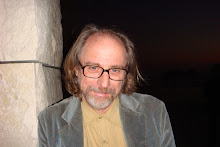
Recently returned from beautiful Queretaro, Mexico, where I was honored to be the keynote speaker at the second international conference on autism held there. I spoke on "Autism and the Family," highlighting the effects of having a child with autism on the family as a whole, as well as on siblings and marriages. I was also honored to be among three other Pacific Child speakers: Arpi Arabian, Marta Marquez, and Stefanie Finney. All gave very well-received speeches on various aspects of their expertise. If you can read Spanish, you can get more info on the conference, as well as view the amazing poster, at http://caadd.com.mx/.
Sunday, October 30, 2011


Wednesday, August 10, 2011
Pacific Child, Children's Learning and Autism Services North Connect!
I am proud to announce that Pacific Child has formally joined forces with two great companies, moves that will help us achieve our goal of becoming the preeminent provider of behavior analytic services in the United States.
The first company to join the family is Children’s Learning Connection, based in Orange County, California. The company was started by Melanie Foshee and Kimberly Eissing, two licensed speech and language therapists with expertise in both autism and in bringing scientifically-validated approaches together in a comprehensive and unified way to maximally benefit those in need. Their company provides speech therapy, occupational therapy, physical therapy, and ABA therapy, as well as parent training, infant programs and social skills programs.
We believe that the expertise Kim and Melanie bring to the coordination of services will greatly assist us in developing a broader menu of services throughout Pacific Child.
The second company to join us is Autism Services North (ASN). ASN is headquartered in Pennsylvania, but the company, begun by Paul Eschbach, BCBA, contracts with BCBAs across 24 states. ASN provides superior behavioral care to the TriCare community and has an excellent reputation with parents and referral sources alike. ASN will allow Pacific Child to provide quality care to more children along the spectrum, particularly across the United States where we currently do not have a presence.
This marks an exciting time in the history of Pacific Child. We look forward to creating new, dynamic synergies among our companies.
The first company to join the family is Children’s Learning Connection, based in Orange County, California. The company was started by Melanie Foshee and Kimberly Eissing, two licensed speech and language therapists with expertise in both autism and in bringing scientifically-validated approaches together in a comprehensive and unified way to maximally benefit those in need. Their company provides speech therapy, occupational therapy, physical therapy, and ABA therapy, as well as parent training, infant programs and social skills programs.
We believe that the expertise Kim and Melanie bring to the coordination of services will greatly assist us in developing a broader menu of services throughout Pacific Child.
The second company to join us is Autism Services North (ASN). ASN is headquartered in Pennsylvania, but the company, begun by Paul Eschbach, BCBA, contracts with BCBAs across 24 states. ASN provides superior behavioral care to the TriCare community and has an excellent reputation with parents and referral sources alike. ASN will allow Pacific Child to provide quality care to more children along the spectrum, particularly across the United States where we currently do not have a presence.
This marks an exciting time in the history of Pacific Child. We look forward to creating new, dynamic synergies among our companies.
Monday, August 8, 2011
Minority Bias
It has been known for some time that minorities, in most walks of life, often do not receive their fair share of services. We know that autism appears in nearly the same proportions throughout all races, nationalities and cultures. But in order to receive the diagnosis, one must be identified by some sort of professional. That is typically a physician.
Several studies have reported that Hispanics have a lower incidence of autism than non-Hispanic Caucasians. Most studies that report these results suggest that this is likely due to the fact that most Hispanics studied have lower income levels, and thus cannot afford the health care required for the diagnosis to be made. This makes sense to me. One study, however, looked at 1184 schools in 254 Texas counties, and counted the number of children in kindergarten through 12th grade in each district who had been diagnosed with autism. In this study, socioeconomic status was in fact controlled for, and the researchers still found fewer Hispanic schoolchildren were diagnosed with autism.
What was fascinating in this study, however, was that that for every 10 percent increase in Hispanic children in a district, the prevalence of autism decreased by 11 percent, while the prevalence of children with intellectual or learning disabilities increased by about 10 percent. Interestingly, the reverse pattern was seen among non-Hispanic Caucasian kids. As their percentage of autism in a district increased by 9 percent, the prevalence of intellectual and learning disabilities fell by about 13 percent.
It appears from these results that Hispanic children may, regardless of their socioeconomic status, be seen as learning disabled, cognitively or intellectually lacking (instead of autistic), while the non-Hispanic children were seen instead as having autism.
Is that surprising?
Several studies have reported that Hispanics have a lower incidence of autism than non-Hispanic Caucasians. Most studies that report these results suggest that this is likely due to the fact that most Hispanics studied have lower income levels, and thus cannot afford the health care required for the diagnosis to be made. This makes sense to me. One study, however, looked at 1184 schools in 254 Texas counties, and counted the number of children in kindergarten through 12th grade in each district who had been diagnosed with autism. In this study, socioeconomic status was in fact controlled for, and the researchers still found fewer Hispanic schoolchildren were diagnosed with autism.
What was fascinating in this study, however, was that that for every 10 percent increase in Hispanic children in a district, the prevalence of autism decreased by 11 percent, while the prevalence of children with intellectual or learning disabilities increased by about 10 percent. Interestingly, the reverse pattern was seen among non-Hispanic Caucasian kids. As their percentage of autism in a district increased by 9 percent, the prevalence of intellectual and learning disabilities fell by about 13 percent.
It appears from these results that Hispanic children may, regardless of their socioeconomic status, be seen as learning disabled, cognitively or intellectually lacking (instead of autistic), while the non-Hispanic children were seen instead as having autism.
Is that surprising?
Wednesday, August 3, 2011
Congrats to our new BCBA's!
Just wanting to send congratulations to our newest BCBAs-- Daniella Putnam, Robin Palm, Zsuzsanna Fodor and Danielle Christner. This is a great milestone, and well-deserved!
Wednesday, June 1, 2011
Going Home
Of the original psychoanalytic triumvirate of Freud, Adler, and Jung, perhaps the most forgotten was Alfred Adler. Adler was best known for the creation of the term “inferiority complex”, but perhaps his greatest contributions were his founding of the child guidance movement, community mental health centers, and his humanistic approach to psychopathology in general.
Adler died suddenly and unexpectedly, most likely of a heart attack, while on a speaking tour in Scotland. He was cremated there, but oddly, his ashes disappeared, perhaps in the chaotic runup to the Second World War. The ashes were just recently found on a shelf just a few hundred yards from the crematorium in Edinburgh, and are being returned to Vienna to be buried in an honored place in the central cemetery.
I am writing these words in a hotel in New York, not far from the hospital where I was born almost six decades ago. Yesterday a cab driver took me down Park Avenue, to a writer’s bar in Greenwich Village I wanted to see. As you travel south from midtown, you drive through a tunnel carved not out of a mountain, but under a building—the Metropolitan Life building (now the Helmsley building). It is an interesting way to build something, and the road itself takes a sharp carve just after you go through the building.
I have not lived in New York for more than half a century, so the experience seemed new to me. But tonight, as I let the thick air of Manhattan surround me as I walked, I remembered it. As a child I would often perch myself on the ledge behind the back seat that most cars had then. I could stare straight up at the world through the back window. That odd sensation of driving down a central street in Manhattan, entering the mouth of a big building, the sky disappearing, and then quickly entering a curve, like a horizontal roller coaster, just came back to me. I remember the strangeness of it, the slight dizziness, not unlike I felt last night in the taxi.
I am not terribly nostalgic about coming home. Life was not good when I lived here. In fact, it was mostly horrible. But it is a touchstone, something that makes one remember who one is. Of course, it is a silly cliché that we all end up going home eventually; we start as ashes and dust and end as ashes and dust.
But there is still something compelling about going back to that original nest, the comfort and safety of the womb, or at least the illusion of that safety.
I left New York and moved to California in high school. Neil Diamond, who went to my high school in New York and had the same music teacher, wrote “L.A.’s fine but it ain’t home, New York’s home but it ain’t mine no more.” What then, is it?
“Home” becomes a touchstone, that which we touch to remind us that we are still alive. It is an anchor, of sorts, a mooring whenever the seas get rough.
Pacific Child began as a dream of independence from the mental health clinics where I had worked previously. Yet it has been my home for 23 years now. As my connection to the heartbeat of PCFA moves closer and more distant, it is my touchstone, my home, my illusion of safety, yet still just a stopover somewhere between ashes and ashes.
Adler died suddenly and unexpectedly, most likely of a heart attack, while on a speaking tour in Scotland. He was cremated there, but oddly, his ashes disappeared, perhaps in the chaotic runup to the Second World War. The ashes were just recently found on a shelf just a few hundred yards from the crematorium in Edinburgh, and are being returned to Vienna to be buried in an honored place in the central cemetery.
I am writing these words in a hotel in New York, not far from the hospital where I was born almost six decades ago. Yesterday a cab driver took me down Park Avenue, to a writer’s bar in Greenwich Village I wanted to see. As you travel south from midtown, you drive through a tunnel carved not out of a mountain, but under a building—the Metropolitan Life building (now the Helmsley building). It is an interesting way to build something, and the road itself takes a sharp carve just after you go through the building.
I have not lived in New York for more than half a century, so the experience seemed new to me. But tonight, as I let the thick air of Manhattan surround me as I walked, I remembered it. As a child I would often perch myself on the ledge behind the back seat that most cars had then. I could stare straight up at the world through the back window. That odd sensation of driving down a central street in Manhattan, entering the mouth of a big building, the sky disappearing, and then quickly entering a curve, like a horizontal roller coaster, just came back to me. I remember the strangeness of it, the slight dizziness, not unlike I felt last night in the taxi.
I am not terribly nostalgic about coming home. Life was not good when I lived here. In fact, it was mostly horrible. But it is a touchstone, something that makes one remember who one is. Of course, it is a silly cliché that we all end up going home eventually; we start as ashes and dust and end as ashes and dust.
But there is still something compelling about going back to that original nest, the comfort and safety of the womb, or at least the illusion of that safety.
I left New York and moved to California in high school. Neil Diamond, who went to my high school in New York and had the same music teacher, wrote “L.A.’s fine but it ain’t home, New York’s home but it ain’t mine no more.” What then, is it?
“Home” becomes a touchstone, that which we touch to remind us that we are still alive. It is an anchor, of sorts, a mooring whenever the seas get rough.
Pacific Child began as a dream of independence from the mental health clinics where I had worked previously. Yet it has been my home for 23 years now. As my connection to the heartbeat of PCFA moves closer and more distant, it is my touchstone, my home, my illusion of safety, yet still just a stopover somewhere between ashes and ashes.
Thursday, April 14, 2011
Welcome to our New Clinical Director
I am thrilled to announce the hiring of our new agency-wide clinical director, Michael Cameron, Ph.D., BCBA-D. Dr. Cameron has been serving in his new post since March 1st, and has already made a great impression on all those with whom he has come in contact. Dr. Cameron's hiring followed an extensive, nationwide search. Prior to joining PCFA, Dr. Cameron was associate professor and founding chair of the Department of Behavior Analysis at Simmons College in Boston. Dr. Cameron brings a breadth of knowledge and experience to PCFA. His fields of expertise include assessing and treating people with autism spectrum disorder, the evaluation of public and private school-based programs for children and adults with ASD, staff traininhg, and direct supervision of evidence-based behavior analytic services. He also has special interests in health and behavioral medicine. He serves on the editorial boards of the Behavior Analyst Today and the Journal of Speech-language Pathology and Applied Behavior Analysis. He has held positions as clinical director, and vice-president of research and development with behavior analysis agencies in Massachusetts, as well as maintaining a private clinical practice. Dr. Cameron chose to join PCFA because he shares our core values: the client always comes first, and our commitment to providing scientifically validated services built on a solid foundation of respect for those we serve. As agency clinical director, Dr. Cameron is responsible for ensuring the quality, viability and expansion of services of PCFA's offices. He also oversees training and the overall clinical direction of the agency. You can reach Dr. Cameron via our toll-free number: 888-805-0759. His direct extension is 204.
Thursday, February 24, 2011
Congrats in Order
Congratulations to our newest BCBAs! Holly Park from our Los Angeles office and Kim Altic from the Redwood Coast office successfully crossed the finish line after completing their marathon requirements toward receiving their board certification. Needless to say, I am so proud of their accomplishments. Both are extraordinarily talented people deeply committed to the work they are doing. We are blessed to have them on our team.
Subscribe to:
Posts (Atom)